01 / CONFIDENCE
"I keep calling the charge nurse."
New grads describe months of blown sticks and asking for help. Volume alone doesn't fix it. A system does.
Assess. Anchor. Advance.
The field guide working nurses keep in their locker. Real grips, real veins, real troubleshooting, written by an MSN, RN, CAPA nurse with thousands of sticks behind him.
Ask nursing students and new nurses what makes IVs hard and you hear the same three things. This book was written to fix them.
New grads describe months of blown sticks and asking for help. Volume alone doesn't fix it. A system does.
The #1 complaint about the category leader: almost no photos. You can't learn a grip from a paragraph.
Dialysis arms, chemo veins, dehydrated elders, anxious patients. Readers want the playbook for the sticks nobody else gets.
Part I is technique. Part II is the strange, brilliant history of how we got here. Every chapter ends with key takeaways you can use on your next shift.
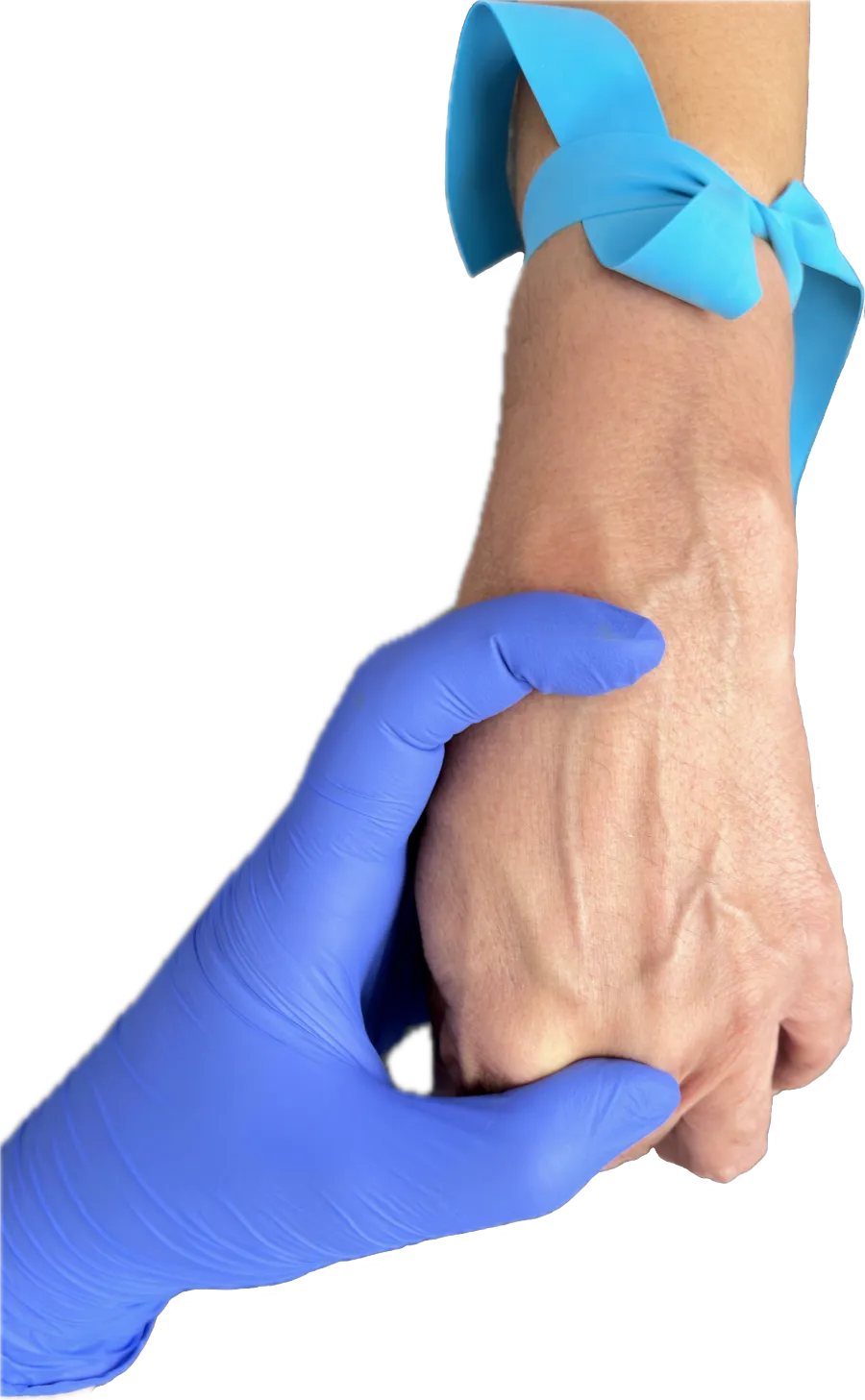
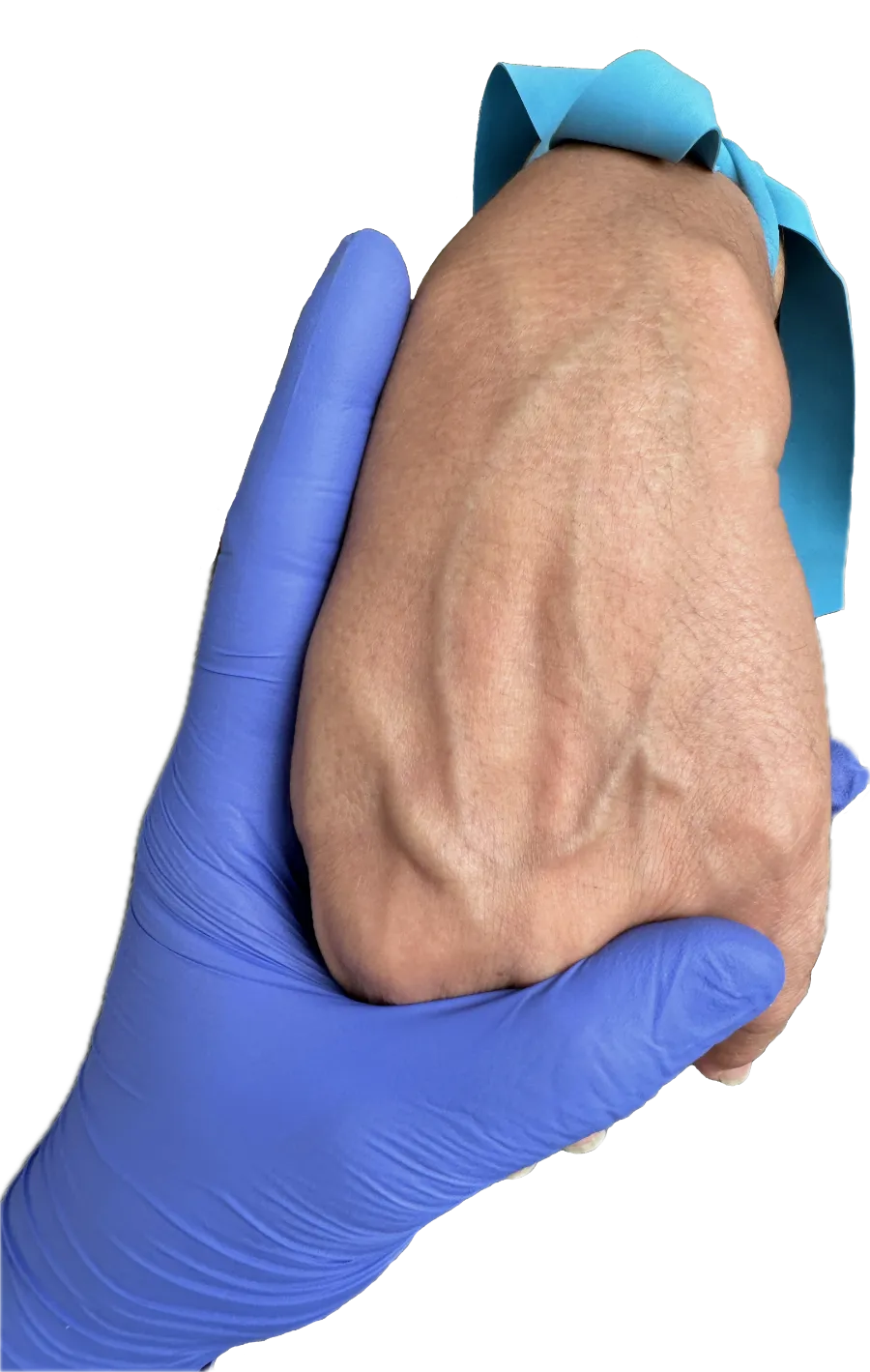
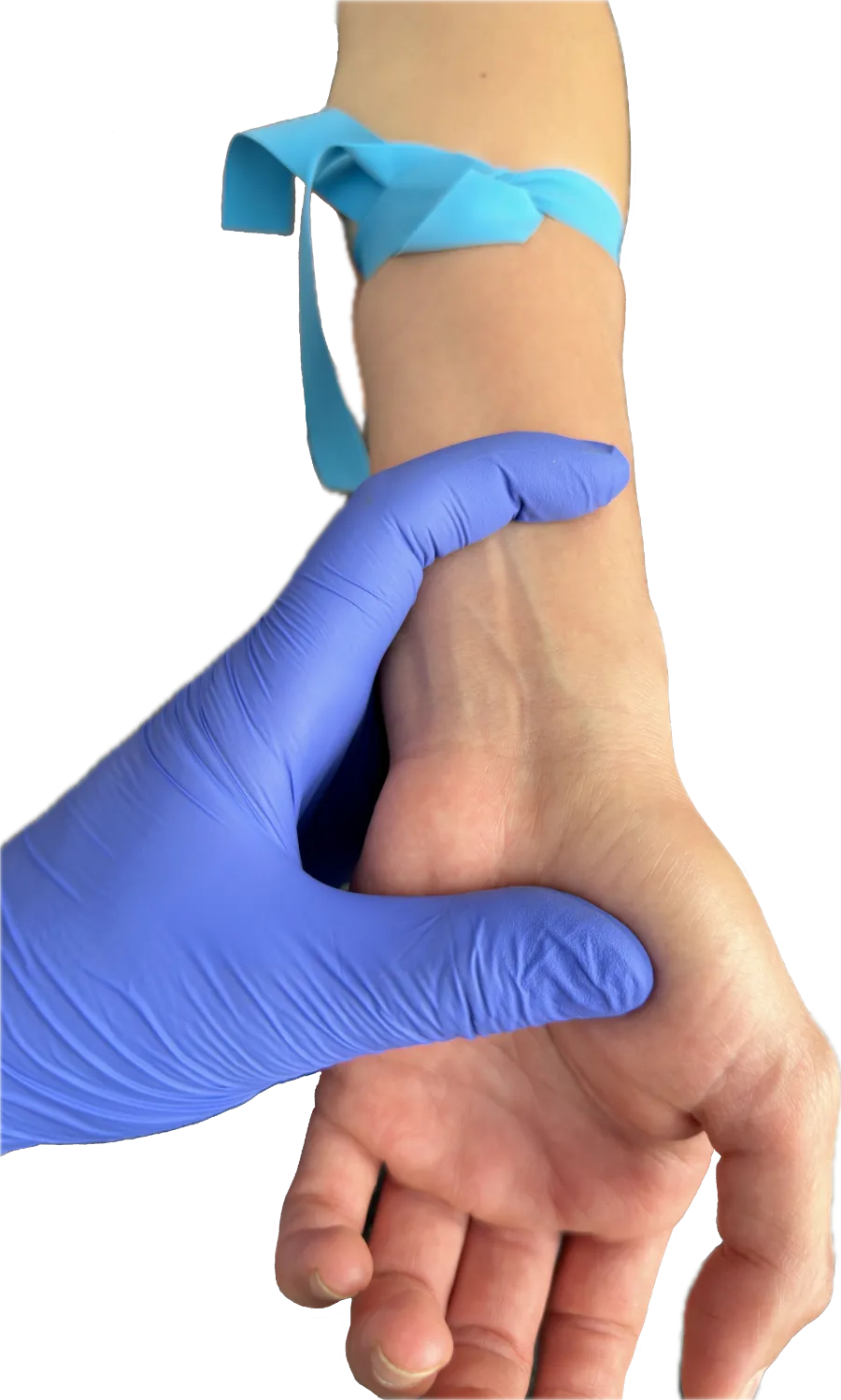
C grip, L grip, crusher grip, C‑clamp, inverted C. Hand, forearm and AC techniques, each one photographed step by step.
Preview the grip library →Why the "easy" hand vein fails, what a sluggish flash is telling you, and how to recover a stick in progress.
Readers call the older‑patient chapter a game‑changer for thin skin and delicate vessels.
Pick the right vein and the right gauge before the needle ever touches skin.
Techniques to minimize discomfort and calm the patient whose veins vanish when you walk in.
Cholera, saline, and the gnarly experiments that made IV therapy what it is. Nursing school skips this. You won't.
The A‑DIVA scale predicts how likely a first attempt is to fail. Answer five questions about your next patient. The best IV nurses assess first, then act.
Based on the A‑DIVA scale, van Loon et al., Medicine 2016. Educational tool only. Follow your facility's protocol.
Each "yes" adds one point. Two or three red flags? Escalate early.
An IV start simulator built from the book. Tourniquet, CHG scrub, anchor, insert, stop at the flash, lower your angle, thread, flush. Three patients, from easy veins to a needle‑phobic patient with a tremor.
Every grip from the book, photographed. Here are a few to start. Get the free Field Kit to unlock the full library.
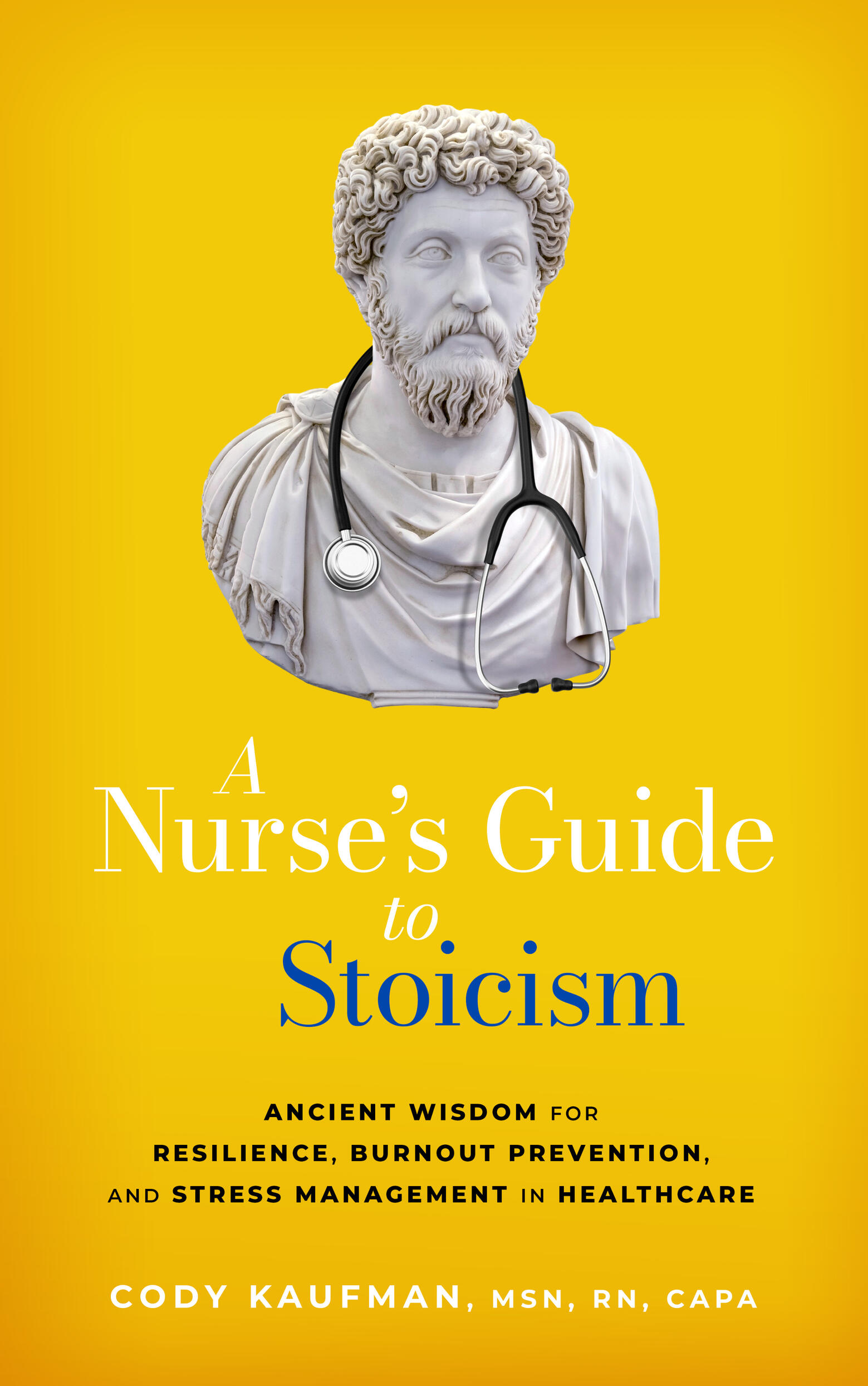
Technique gets the line in. Mindset gets you through the shift. A Nurse's Guide to Stoicism turns Marcus Aurelius, Epictetus and Seneca into short, usable tools for burnout, moral distress and the 3 a.m. spiral.
"Short mindset tips easy to use during a busy shift. Didn't feel preachy."
Zach, verified reader
91% five‑star. Rated higher than every other IV insertion book in Amazon's "also viewed" set.
"Easy‑to‑follow instructions and tips make the process feel less intimidating."
"Each chapter is summarized with key takeaways."
"My NP and PA staff reported improved success with insertions."
"Useful tricks for dilation I can implement in my IV practice."
"Explains not only the how but also the why behind each technique."
"The historical part was a surprising bonus."

I've placed thousands of IVs. I still miss sometimes, and I write about those misses too. Tiger Woods missed putts. Michael Jordan missed shots. Missing an IV doesn't make you a bad nurse. It's how we learn, as long as we learn from it. These books are everything I wish someone had handed me as a new nurse.
"The best IV nurses assess first, anticipate difficulty, and act strategically."
Short, evidence-based reads on technique, complications, patient care and the mindset that gets you through the day.
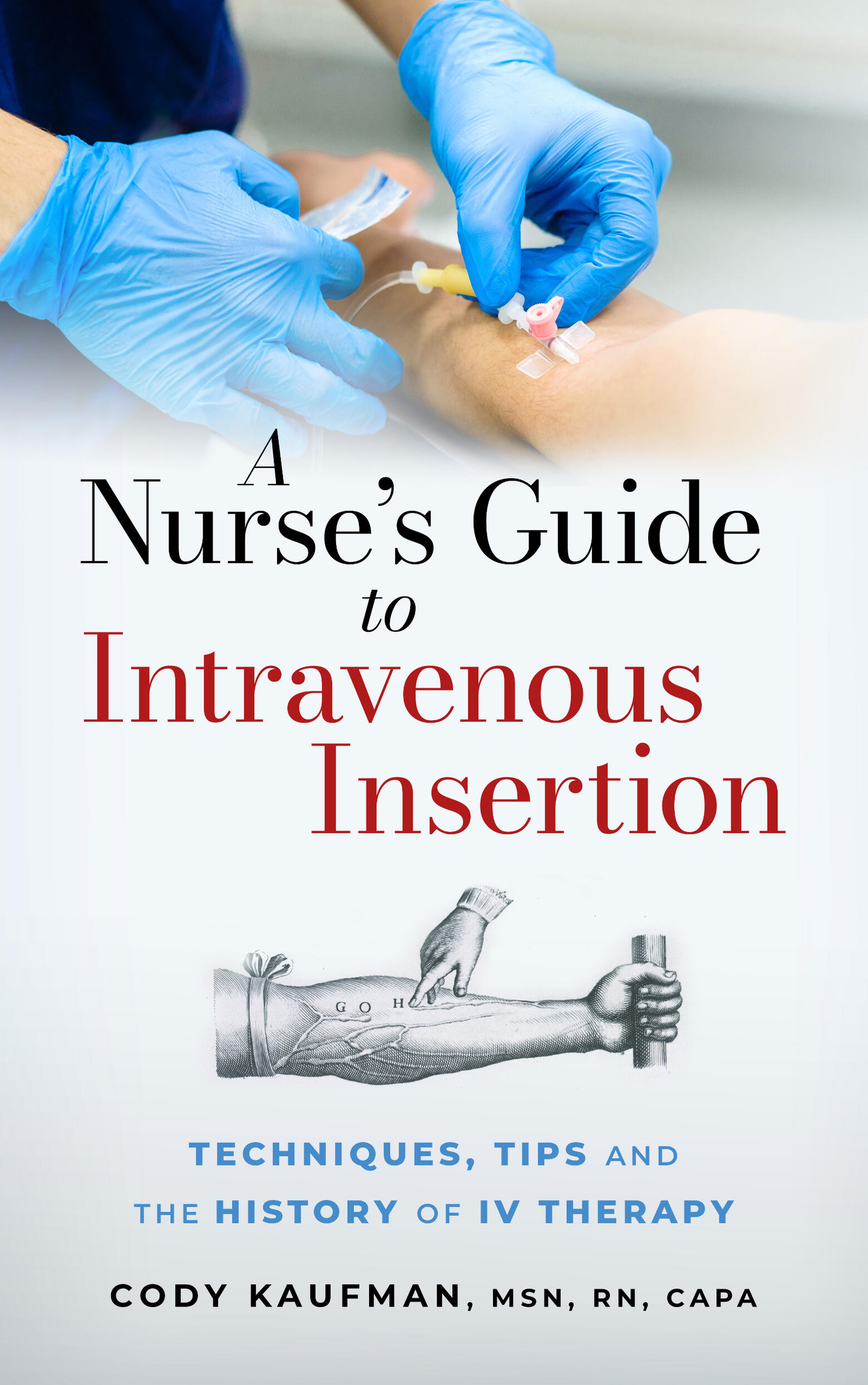
A Nurse's Guide to Intravenous Insertion is a 300‑page, 4.9‑star guide by Cody Kaufman, MSN, RN, CAPA. It covers vein anatomy, catheter selection, grips and stabilization, difficult and fragile veins, troubleshooting, and the history of IV therapy, for students through experienced clinicians.
Get volume, assess before you stick, and master stabilization. Use a tourniquet every time, anchor the vein with a deliberate grip, choose a catheter smaller than the vessel, and reflect on every miss. Pattern recognition comes from repetition plus structured assessment.
Assess first with a tool like the A‑DIVA scale. Warm the limb, let the arm hang dependent, apply a proper tourniquet, palpate instead of relying on sight, consider a smaller gauge, and escalate early to ultrasound or a more experienced clinician when red flags stack up.
Common causes: no tourniquet, low blood pressure, a distal site like the hand where flow is slower, a very small vein, or the catheter against or through the vein wall. A tourniquet restores venous pressure and usually speeds up the flash.
Yes. It's written for RNs, LPNs/LVNs, nursing and medical students, EMTs, paramedics, PAs, CRNAs and imaging techs who place peripheral IVs.
Stoic practices like separating what you control from what you don't, rehearsing hard moments in advance, and short end‑of‑shift reflection give nurses practical tools for stress. A Nurse's Guide to Stoicism applies them to real shifts. It complements, not replaces, professional mental health support.