
Key takeaways
- Sort every stressor into two columns: what you control and what you don't.
- Spend your energy on the first column. Advocate about the second through the right channels.
- Stoicism helps you carry stress. It doesn't replace staffing fixes or professional support.
Report starts and you see it: two call-outs, a full board, and you're taking six. Your shoulders are up by your ears before you've seen a single patient. Nearly 2,000 years ago, a former slave turned philosopher named Epictetus opened his handbook with an idea built for moments like this.
The idea
Epictetus taught that some things are up to us and some are not. Our judgments, intentions and actions are up to us. Other people's choices, outcomes, and circumstances largely are not. Most of our distress, he argued, comes from treating the second category as if it were the first.
It sounds almost too simple. That's why it works at 3 a.m.
Why nurses need it
Burnout is common in nursing. In Nurse.com's 2026 salary and work-life report, 53% of nurses said they'd experienced burnout in the previous two years, and unmanageable nurse-to-patient ratios were among the top factors. Many of the biggest stressors on a shift are, by design, outside a bedside nurse's control in the moment. Stewing on them burns energy you need for the things you can control.
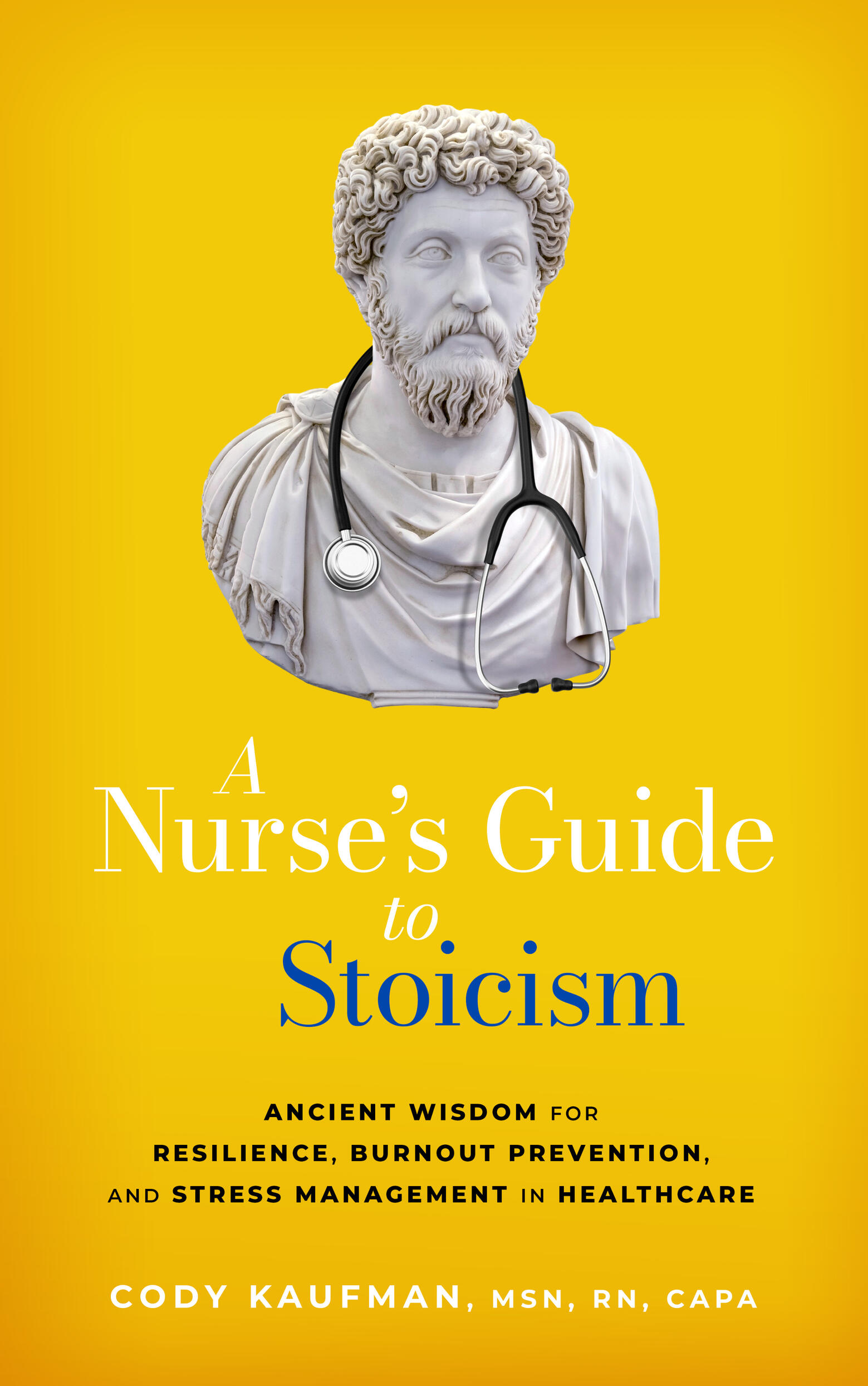
Want more tools like this? A Nurse's Guide to Stoicism turns Stoic ideas into habits you can use mid-shift.
The two-column exercise
Take two minutes before or early in the shift. On a scrap of paper or in your head:
| Not in my control (tonight) | In my control |
|---|---|
| Staffing and assignments | How I prioritize and cluster care |
| A family member's anger | My tone and what I explain |
| Whether the vein is good | My assessment, setup and when I escalate |
| The doctor's response time | A clear SBAR and documenting that I called |
| How the shift ends | How I show up for each patient |
Then make a deal with yourself: right column gets your effort. Left column gets acceptance for now, and advocacy later through the proper channels.
"Acceptance" isn't "giving up"
This is where people misread the Stoics. Accepting that you can't fix tonight's staffing doesn't mean you stay quiet about unsafe staffing. Raising concerns through your charge nurse, an assignment objection form, or your unit's shared governance is an action, and actions are in your control. The Stoics were deeply engaged with duty and justice. The point is where you put your energy in the moment, not whether you care.
A mid-shift reset
When you feel the spiral starting, ask three questions:
- What's actually happening right now? (Facts only, five words.)
- What part of this is mine to act on?
- What's the next single action?
Then do the next action. The same move works on a hard IV: you can't control the patient's veins, but you can control your assessment and when you escalate.
Where it doesn't help
Stoic tools help you carry stress. They don't fix broken systems, and they are not a substitute for real support. If you're struggling, talk to someone you trust, your employee assistance program, or a mental health professional. Strong people use support. That's in your control too.
You can't control the assignment. You can control the next right action.
References
- Epictetus. Enchiridion (Handbook), section 1. Public domain translations are widely available.
- Nurse.com. 2026 Nurse Burnout Statistics: Rates, Causes, and Trends. nurse.com
This post is for education. Always follow your facility's policies and your scope of practice, and ask for help when you need it.