
Key takeaways
- Needle fear affects roughly 20 to 30% of young adults, and some people skip care because of it.
- Words matter. Neutral, honest language beats both 'this will hurt' and 'this won't hurt a bit.'
- Ask about fainting. For people who faint, lying down and applied tension help.
Some patients watch the needle go in like it's a cooking show. Others go pale the moment you open the IV start kit. If you place IVs, you'll meet a lot of the second group, and how you handle the next two minutes shapes their whole visit.
How common is it?
A large systematic review and meta-analysis by McLenon and Rogers (2019) looked at 119 studies. Needle fear was most common in children, affected an estimated 20 to 50% of adolescents and about 20 to 30% of young adults, then declined with age. It also changes behavior: in the studies reviewed, a meaningful share of adults, including healthcare workers, reported avoiding flu vaccines because of needle fear.
So the anxious patient in front of you isn't being dramatic. They're common.
Start with one question
"How do you usually do with needles?" It takes five seconds, and the answer tells you a lot. Ask specifically about fainting. Some people have a vasovagal response: heart rate and blood pressure drop, and they pass out. Those patients need a different plan, starting with lying down before you begin.
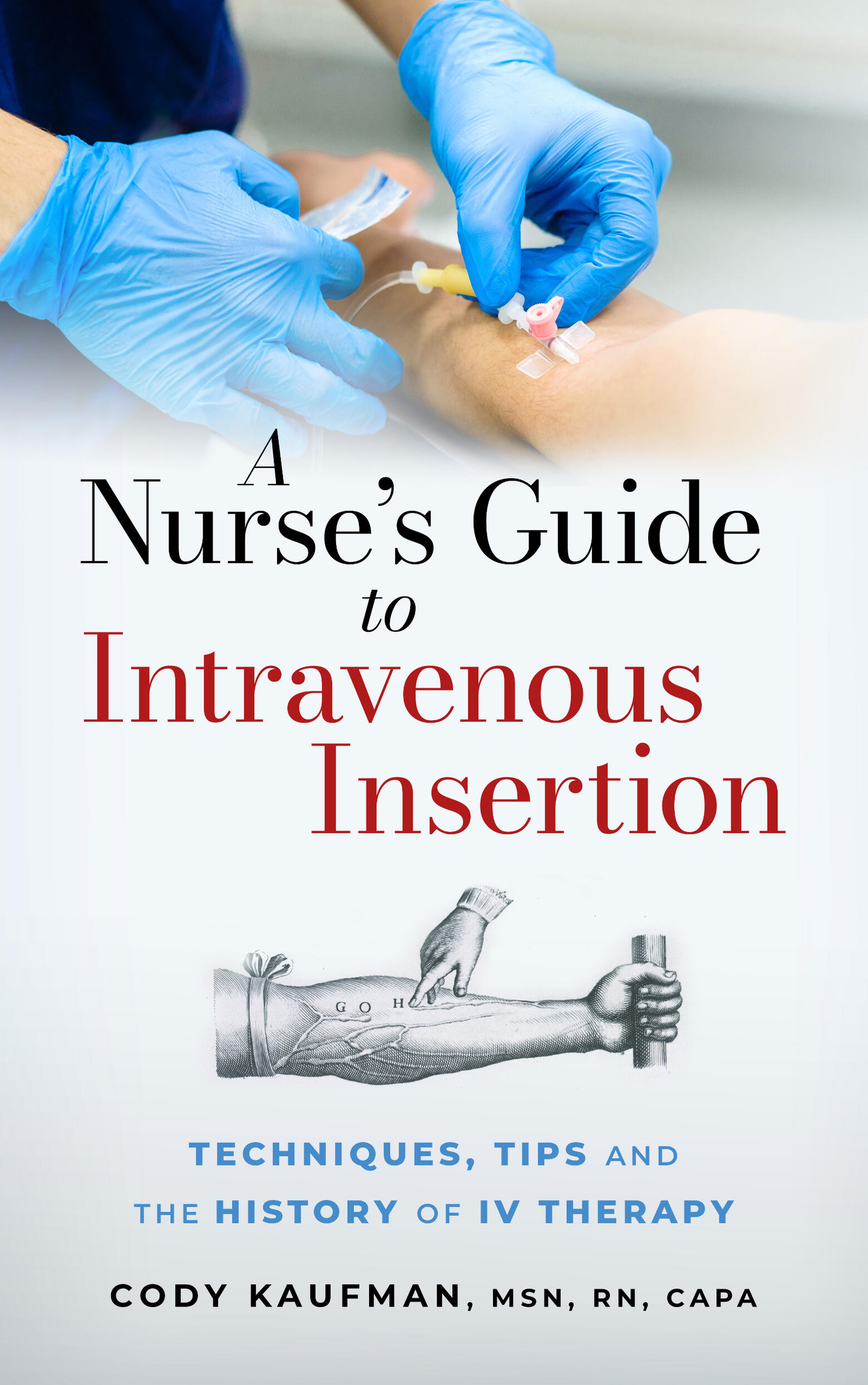
Want the full technique, step by step? A Nurse's Guide to Intravenous Insertion covers it with photographed grips and real-world troubleshooting.
Words matter
Research on procedural communication suggests that negative, emotionally loaded words ("this is going to sting," "sorry, sorry") can increase how much pain and anxiety patients report (Lang et al., 2005). The opposite extreme, "you won't feel a thing," breaks trust the moment they do.
Aim for neutral and honest:
- "You'll feel some pressure and a quick pinch, and then it's done."
- "I'm going to count to three. Take a slow breath out on three."
- "The needle comes out right away. Only a soft plastic tube stays in."
That last one surprises a lot of patients and visibly relaxes them.
Evidence-based comfort tools
Distraction and breathing
Conversation, a phone video, counting backward, or slow exhales all help. Exhaling during insertion is simple and gives anxious patients a job to do.
Applied tension for people who faint
Applied tension, developed by psychologist Lars-Göran Öst for blood and injection fears, teaches patients to tense the large muscles of the arms, chest and legs for 10 to 15 seconds, release, and repeat. It raises blood pressure and counters the drop that causes fainting. Have them tense the legs and the arm you're not using.
Numbing
Depending on your facility and orders, options can include topical anesthetic creams (which need time to work, so plan ahead), needle-free buffered lidocaine devices, or vapocoolant sprays. Ask what your unit stocks and when it's appropriate.
Good technique
The best pain reducer is getting it on the first try. Take the time to warm and position the arm instead of rushing to stick.
If the patient faints
Stop, remove the tourniquet, secure the needle or catheter, lower the head of the bed and raise the legs, monitor vital signs, and get help. Most people recover in seconds to minutes. Document it and note it for the next nurse.
The patient won't remember your gauge. They'll remember how you made them feel.
References
- McLenon, J., & Rogers, M. A. M. (2019). The fear of needles: A systematic review and meta-analysis. Journal of Advanced Nursing, 75(1), 30 to 42.
- Lang, E. V., Hatsiopoulou, O., Koch, T., et al. (2005). Can words hurt? Patient-provider interactions during invasive procedures. Pain, 114(1 to 2), 303 to 309.
- Öst, L.-G., & Sterner, U. (1987). Applied tension: A specific behavioral method for treatment of blood phobia. Behaviour Research and Therapy, 25(1), 25 to 29.
This post is for education. Always follow your facility's policies and your scope of practice, and ask for help when you need it.