
Key takeaways
- Local warming has solid trial evidence: higher first-attempt success and faster insertion.
- Gravity and a well-placed tourniquet are free and fast. Use them every time.
- Slapping hurts and bruises. Hard fist pumping can skew potassium on blood draws.
Every nurse has a bag of vein tricks. Some come from research, some come from a charge nurse in 1998, and some are pure superstition. Here's how the common ones stack up.
1. Heat: the best-studied trick
This one has real evidence behind it. In a pair of randomized trials published in the BMJ, Lenhardt and colleagues warmed patients' hands and forearms with a heated mitt before cannulation. In neurosurgical patients, first-attempt success was 94% with warming versus 72% with an unheated mitt, and insertion was faster (about 36 seconds versus 62). A second trial in patients receiving chemotherapy showed a similar jump.
At the bedside: a warm pack or warm blanket wrapped around the arm for several minutes while you gather supplies. Check the temperature first, especially on older adults, patients with neuropathy, or anyone who can't report discomfort. Use what your facility approves.
2. Gravity: free and instant
Let the arm hang below heart level for a minute or two. Venous blood pools in the hand and forearm and veins fill. Combine with warmth while you set up and you've used two of the best tricks without spending a cent.
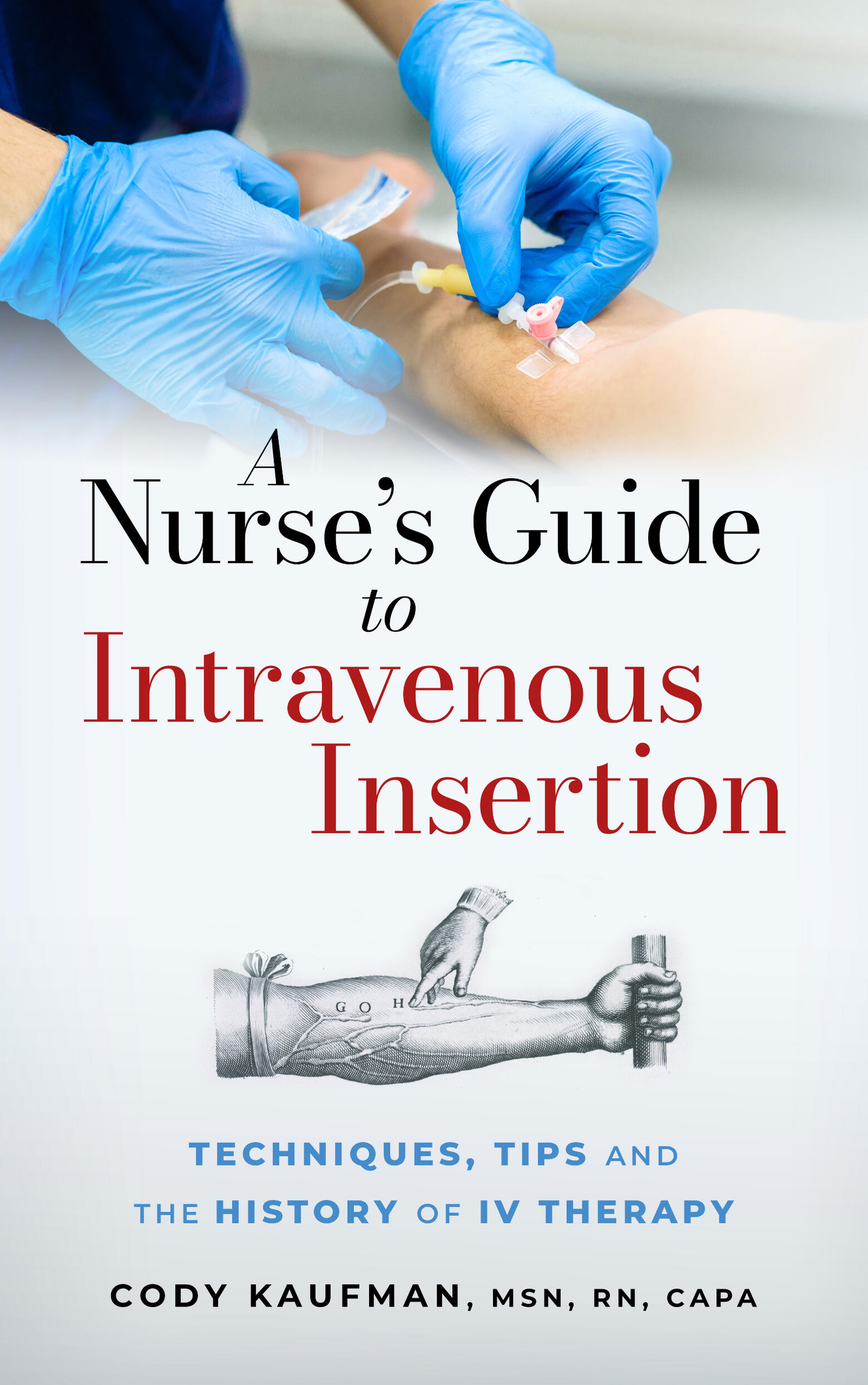
Want the full technique, step by step? A Nurse's Guide to Intravenous Insertion covers it with photographed grips and real-world troubleshooting.
3. The tourniquet, done right
- Place it about 4 to 6 inches above your target site.
- Tight enough to stop venous return, never tight enough to lose the radial pulse.
- Give the veins time to fill, and don't leave it on longer than needed.
- For very fragile veins, a looser tourniquet (or none) can prevent blowing the vein.
Skipping it to save time usually costs more time, as I learned the hard way in the tourniquet lesson.
4. Gentle stroking and tapping
Lightly stroking the vein toward the heart, or a few gentle taps, can encourage filling. Keep it gentle. The goal is to help the vein fill, not to provoke it.
Tricks to skip
Slapping the vein
It's painful, it can bruise, and it doesn't do anything a gentle tap won't. Patients remember the nurse who slapped them.
Aggressive fist pumping
A relaxed fist or a couple of gentle squeezes is fine. Repeated, vigorous clenching with a tourniquet on can falsely raise potassium if you're drawing labs from the line, a well-documented effect known as pseudohyperkalemia (Don et al., 1990). Ask for a relaxed hand.
Picking the "visible" vein over the palpable one
Thin superficial veins look great and often blow. A vein you can feel bounce under your finger is almost always the better choice, even if you can't see it.
When nothing pops
If warmth, gravity and a tourniquet still leave you with nothing, that's useful information. Score the patient with the A-DIVA scale, try a vein finder for superficial veins, and escalate to ultrasound early instead of poking blind.
Warm it. Hang it. Tie it. Feel it. Then stick it.
References
- Lenhardt, R., Seybold, T., Kimberger, O., Stoiser, B., & Sessler, D. I. (2002). Local warming and insertion of peripheral venous cannulas: Single blinded prospective randomised controlled trial and single blinded randomised crossover trial. BMJ, 325(7361), 409. PMC119431
- Don, B. R., Sebastian, A., Cheitlin, M., Christiansen, M., & Schambelan, M. (1990). Pseudohyperkalemia caused by fist clenching during phlebotomy. New England Journal of Medicine, 322(18), 1290 to 1292.
This post is for education. Always follow your facility's policies and your scope of practice, and ask for help when you need it.