
Key takeaways
- Without a tourniquet, low pressure and a distal site can leave you with little or no flashback even when you are in the vein.
- Applying a tourniquet takes about two seconds and can save the patient a second stick.
- Fundamentals exist for a reason. They matter most when the room is loudest.
I recently found myself amid a whirlwind of activity that tested my skills and knowledge. Amid the hustle and bustle of staff rushing in, grabbing supplies, and connecting monitors, I faced a challenge that reminded me of the importance of sticking to the basics, no matter the pressure.
The situation
A patient had briefly lost consciousness and became hypotensive, necessitating an immediate IV to administer fluids and medications. I could see the vein in the patient's hand was visibly prominent from a distance. It seemed like an easy target for any nurse. My coworker arrived and handed me the IV supplies. Caught in the urgency of the moment and driven by the perceived need to act quickly, I decided to skip placing a tourniquet, thinking it would save precious seconds. After all, the dorsal hand vein was right there, large and superficial.
The attempt and the realization
My first attempt to insert the IV catheter seemed perfect, but to my surprise, there was no blood flashback. But I knew I should be "in." I had that intuition and feel you hone after doing thousands of IVs. Puzzled, I paused, adjusted, and tried again along the same vein. Still nothing. It was baffling. Everything seemed right, but the usual sign of a successful insertion, the blood flashback, was absent in the catheter.
I thought to myself, "You have got to be kidding me. This vein is so easy. How could I miss?!" And it was extra embarrassing in front of my colleagues, nurses, and doctors. Here I was, the IV book guy, missing!
It was only after withdrawing, resetting, and re-attempting the insertion slightly above the previous one that I finally saw a slow, creeping blood flashback, like molasses. The flashback was unusually sluggish, and even after confirming the catheter's position, my doubts lingered. I flushed it with saline, felt no resistance, and saw no swelling, so I knew I was in, and a sigh of relief flowed over me.
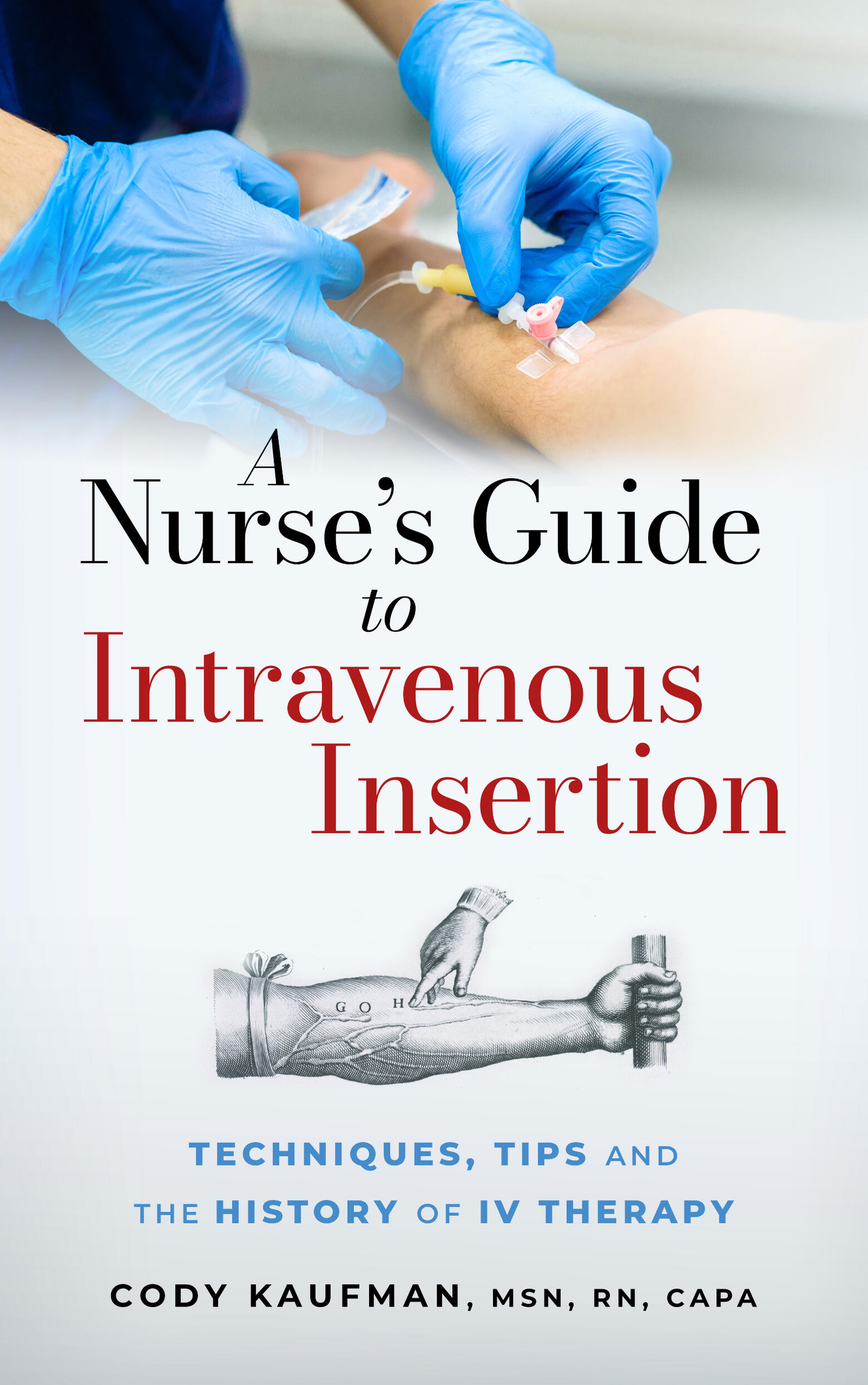
Want the full technique, step by step? A Nurse's Guide to Intravenous Insertion covers it with photographed grips and real-world troubleshooting.
The insight
Upon reflection, I realized several factors contributed to this unexpected difficulty. The patient's low blood pressure (systolic in the high 80s), combined with the distal location of the insertion in the hand (far from the heart, where blood velocity tends to be lower), significantly affected the blood's movement up the catheter. Most importantly, my decision to forgo the tourniquet meant there wasn't sufficient venous pressure to push the blood up the catheter for that quick visual flashback confirmation that I was in the vein.
The lesson
This experience was a stark reminder that even in an emergency, taking a few extra seconds to apply a tourniquet can make a significant difference. It's stupidly obvious, in retrospect. In fact, I talk about this exact type of scenario in chapter 1 of my book. I didn't follow my own advice, and it backfired on me.
In this situation, if I had taken the extra two seconds to apply a tourniquet, it could have reduced the trauma I caused to the patient by preventing a second stick, and it would have taken me the same amount of time, if not less, than skipping the tourniquet and making two attempts. The fundamentals of nursing care, like using a tourniquet, are foundational for a reason: they are proven to enhance outcomes and patient safety.
Conclusion
Every nurse has moments of realization like this one, where the pressures of the job push us toward shortcuts. However, it is crucial to remember that adhering to basic practices is not just about protocol. It's about patient care at its highest standard. I share this story not only as a reflection but as a reminder to my fellow healthcare professionals to sometimes slow down a bit, even when every second counts, to ensure we're not compromising on care.
This post is for education. Always follow your facility's policies and your scope of practice, and ask for help when you need it.