
Key takeaways
- Gauge numbers run backward: the smaller the number, the larger the catheter.
- Choose the smallest gauge that meets the therapy. Bigger catheters in small veins raise the risk of phlebitis.
- Flow rates are approximate and change with catheter length, fluid viscosity and pressure. Check the package.
Few things trip up new nurses like the gauge question. "Grab me an 18." "Why not a 22?" Here's the short version you can keep in your head, plus the reasoning behind it.
The gauge chart
Gauge numbers run backward. A 14 gauge is a large catheter, a 24 gauge is a small one. Colors follow an international standard that most manufacturers use, and flow rates below are approximate gravity flows for a typical short peripheral catheter.
| Gauge | Typical color | Approx. flow | Common uses |
|---|---|---|---|
| 14G | Orange | ~240 mL/min | Trauma, massive rapid transfusion, major surgery |
| 16G | Gray | ~180 mL/min | Trauma, rapid fluid or blood replacement |
| 18G | Green | ~90 mL/min | Rapid fluids, blood, many surgical patients, CT contrast per protocol |
| 20G | Pink | ~60 mL/min | Most adult infusions, routine transfusion |
| 22G | Blue | ~36 mL/min | Most infusions, smaller or fragile veins, older adults, pediatrics |
| 24G | Yellow | ~20 mL/min | Small or fragile veins, pediatrics, neonates |
Flow figures adapted from Pedagogy's peripheral IV catheter chart. Exact colors and rates vary by brand, so check the packaging you actually use.
Why bigger isn't automatically better
It's tempting to place the biggest catheter you can "just in case." But a catheter that fills most of the vein irritates the vein wall and blocks blood flow around the tip, which raises the risk of mechanical phlebitis and early failure. The Infusion Nurses Society's guidance is to use the smallest gauge that can deliver the prescribed therapy.
A useful mental check: the catheter should look comfortably smaller than the vein you can see and feel, with room for blood to flow around it.
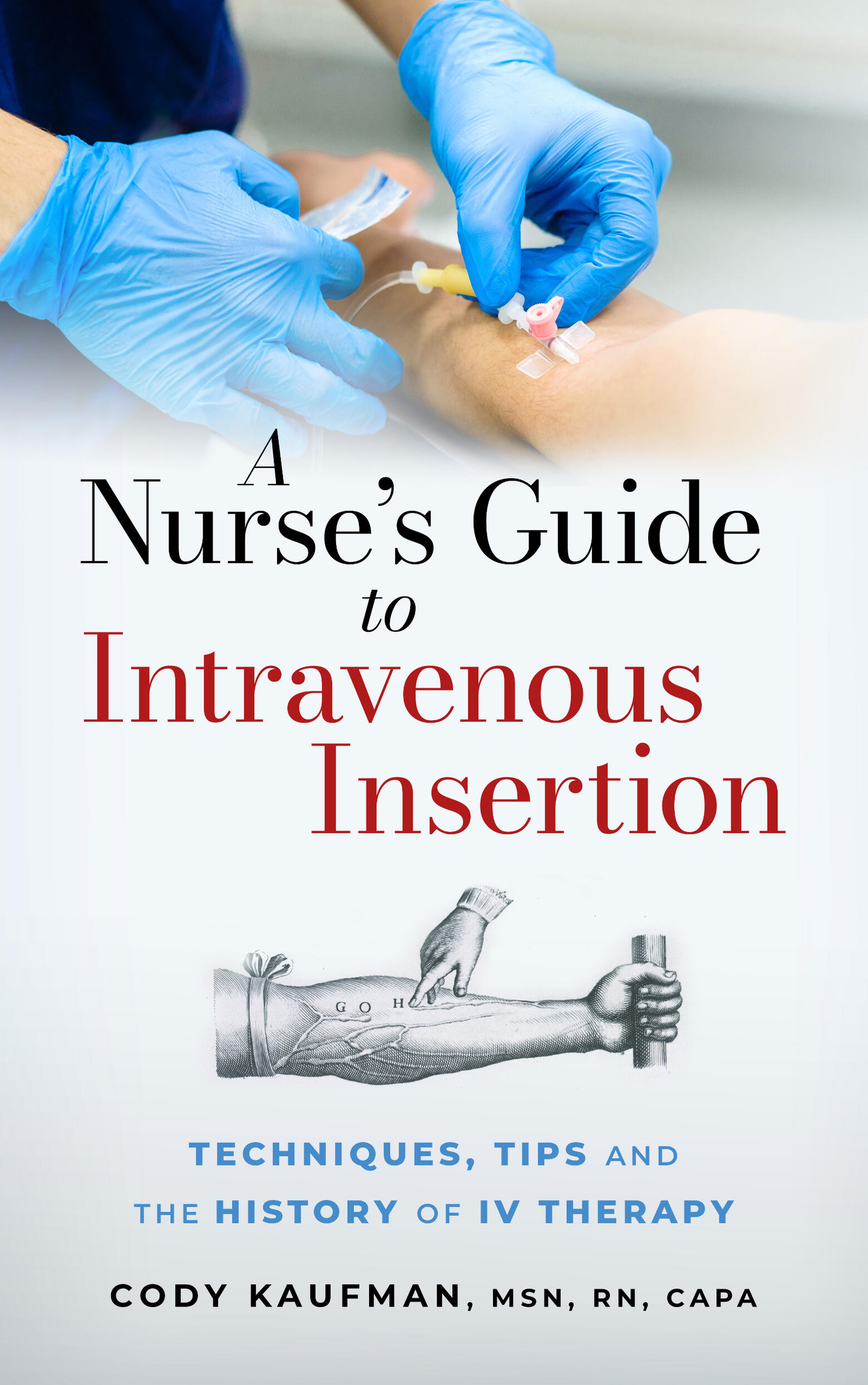
Want the full technique, step by step? A Nurse's Guide to Intravenous Insertion covers it with photographed grips and real-world troubleshooting.
A quick physics lesson (that actually helps)
Flow through a tube depends on the radius raised to the fourth power, and it drops as the tube gets longer (Poiseuille's law). In practice that means:
- Going up one gauge size makes a big difference in flow, more than you'd guess.
- Two short peripheral lines can outrun one long, narrow central lumen for volume resuscitation.
- Thick fluids such as blood products flow slower than crystalloid through the same catheter.
What about blood transfusions?
Older teaching said blood needs an 18. Current practice is more flexible: infusion standards accept smaller gauges (commonly 20 to 24 in adults, and smaller for pediatrics) for routine transfusion, with larger gauges when you need to give blood fast. Always check your facility's transfusion policy, because it may be stricter.
Picking a gauge in 10 seconds
- What's the therapy? Rapid volume or trauma pushes you larger. Routine fluids and meds rarely need more than a 20 or 22.
- What's the vein? Pick a gauge clearly smaller than the vessel.
- What's the protocol? CT contrast injections and some procedures require a minimum gauge. Know yours.
Smallest catheter that does the job, in the best vein you can find.
References
- Pedagogy Education. Peripheral IV catheter chart. pedagogyeducation.com
- Infusion Nurses Society. Infusion Therapy Standards of Practice (current edition).
This post is for education. Always follow your facility's policies and your scope of practice, and ask for help when you need it.