
Key takeaways
- Phlebitis is inflammation of the vein. Grade it with the 0 to 5 VIP score at every site check.
- A VIP score of 2 or higher means remove or resite the catheter.
- Match the fix to the cause: mechanical (size, motion), chemical (what's infusing) or bacterial (hygiene).
Phlebitis is inflammation of the vein wall, and it's one of the most common reasons a peripheral IV fails early. The tricky part is that the early signs are subtle. A little pinkness, a little tenderness, and it's easy to shrug and move on. A simple scoring tool takes the guesswork out.
The VIP score
The Visual Infusion Phlebitis (VIP) score, developed by UK nurse Andrew Jackson in 1998, grades the site from 0 to 5 and pairs each grade with an action:
| Score | What you see | Action |
|---|---|---|
| 0 | Healthy site | Observe |
| 1 | Slight pain or slight redness near the site (one sign) | Possible first sign. Observe closely |
| 2 | Two of: pain, redness, swelling | Early phlebitis. Resite the catheter |
| 3 | Pain along the cannula path, redness, swelling | Medium-stage phlebitis. Resite and consider treatment |
| 4 | Pain, redness, swelling and a palpable venous cord along the path | Advanced phlebitis or start of thrombophlebitis. Resite and treat |
| 5 | All of the above, extensive, plus fever | Advanced thrombophlebitis. Resite, treat and escalate |
The key number is 2. At 2 or above, the catheter comes out and goes somewhere else. Document the score every time you assess the site so trends are visible.
The three types of phlebitis
Mechanical
The catheter itself irritates the vein. Common causes:
- A catheter too large for the vein (see the gauge guide)
- Placement over a joint, where every bend moves the tip
- Poor securement, so the catheter slides in and out
Fix: smallest suitable gauge, avoid flexion areas, secure it well.
Chemical
What's running through the line inflames the vein. Solutions and drugs with high osmolality (generally above about 500 mOsm/L) or a pH below 5 or above 9 are more irritating. Potassium, some antibiotics and concentrated dextrose are frequent offenders. Infusing too fast can make it worse.
Fix: larger vein for irritating infusions, proper dilution and rate, and frequent site checks. For drugs that are irritating long-term, the team may need to consider a different type of access. The osmolality tables in the free IV Field Kit help you spot the high-risk ones.
Bacterial
Microorganisms enter at the skin or through the hub. This is the most dangerous type because it can lead to bloodstream infection.
Fix: hand hygiene, proper skin antisepsis with full dry time, an intact dressing, and disciplined hub disinfection (scrubbing the needleless connector with alcohol and letting it dry) before every access.
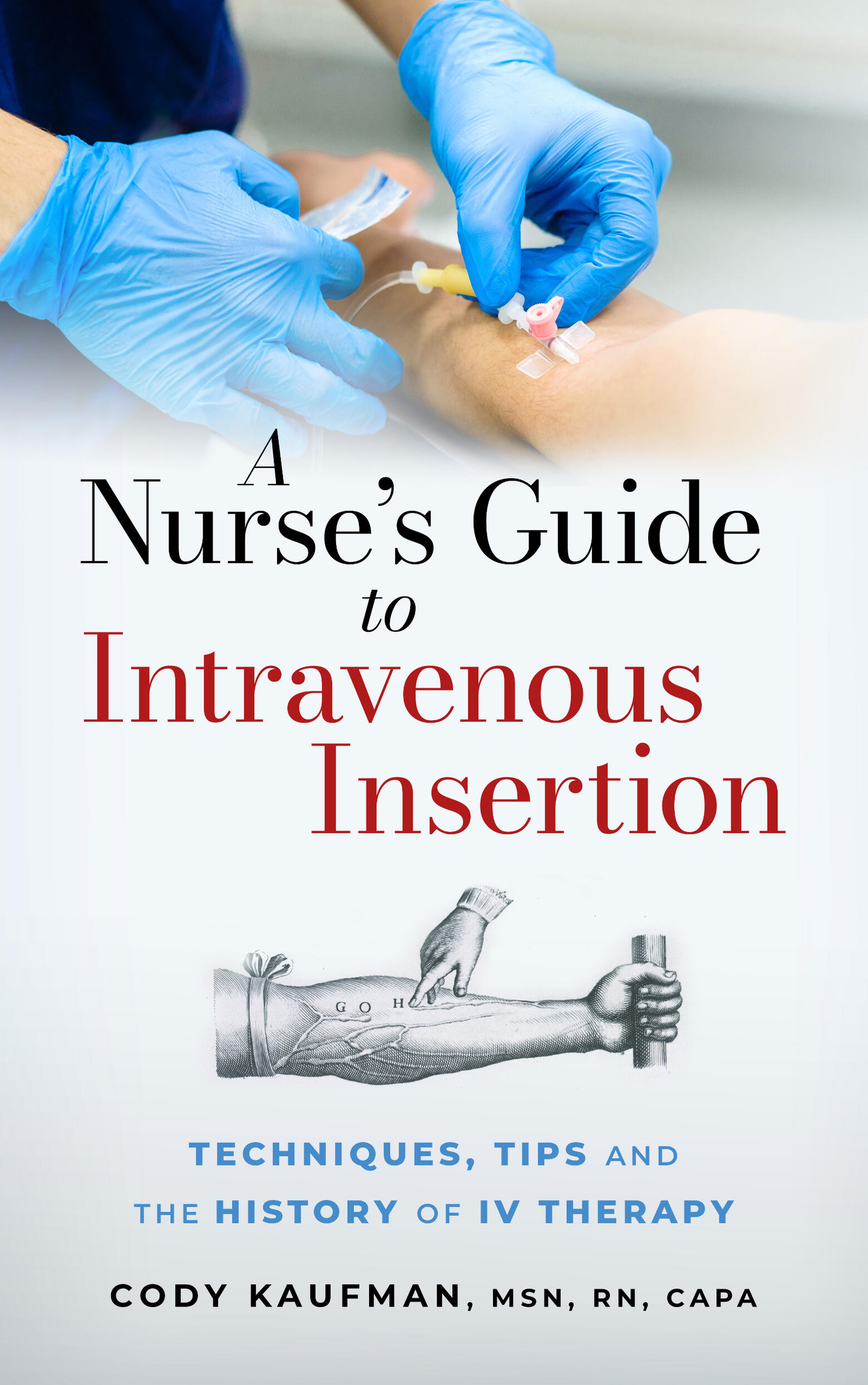
Want the full technique, step by step? A Nurse's Guide to Intravenous Insertion covers it with photographed grips and real-world troubleshooting.
What to do when you find it
- Score it and stop the infusion if the score is 2 or more.
- Remove the catheter and restart in a different site, ideally the other arm.
- Elevate the limb. A warm compress can help comfort for non-infectious phlebitis, per your facility's protocol.
- If you suspect infection (purulence, fever, spreading redness), notify the provider. They may want a culture.
- Document the score, intervention and follow-up checks.
Score it every time you look at it. Phlebitis caught at a 1 rarely becomes a 4.
References
- Jackson, A. (1998). Infection control: A battle in vein: infusion phlebitis. Nursing Times, 94(4), 68 to 71.
- IVTEAM. The importance of grading infusion phlebitis. ivteam.com
This post is for education. Always follow your facility's policies and your scope of practice, and ask for help when you need it.