
Key takeaways
- Infiltration is a non-vesicant fluid leaking into tissue. Extravasation is a vesicant doing the same, and it can cause blistering and necrosis.
- Grade it (0 to 4), measure it, mark it and document it.
- Stop the infusion first. Then follow your facility's protocol, which may include aspirating before removal and a specific antidote.
A patient mentions their arm feels "tight." You look and the skin around the IV is pale, cool and puffy. Is it infiltration or extravasation, and does the difference matter? It matters a lot.
The difference in one sentence
Infiltration is when a non-vesicant solution (like normal saline) leaks into the surrounding tissue. Extravasation is when a vesicant, a drug that can cause blistering, tissue injury or necrosis, does the same thing. Same mechanism, very different stakes.
Common vesicants and irritants include many chemotherapy agents, vasopressors such as norepinephrine, concentrated potassium, calcium, hypertonic dextrose, some contrast media and certain antibiotics. Your facility likely keeps a vesicant list. Know where it is.
Early signs to catch
- Swelling around or above the insertion site
- Skin that's pale, taut, shiny or cool to the touch
- Pain, burning, tightness or "pressure" at the site
- An infusion that's slowing, or a pump alarming for occlusion
- Fluid leaking around the dressing
A good habit: compare both arms. Subtle swelling is much easier to see side by side. And ask the patient. They often feel it before you see it.
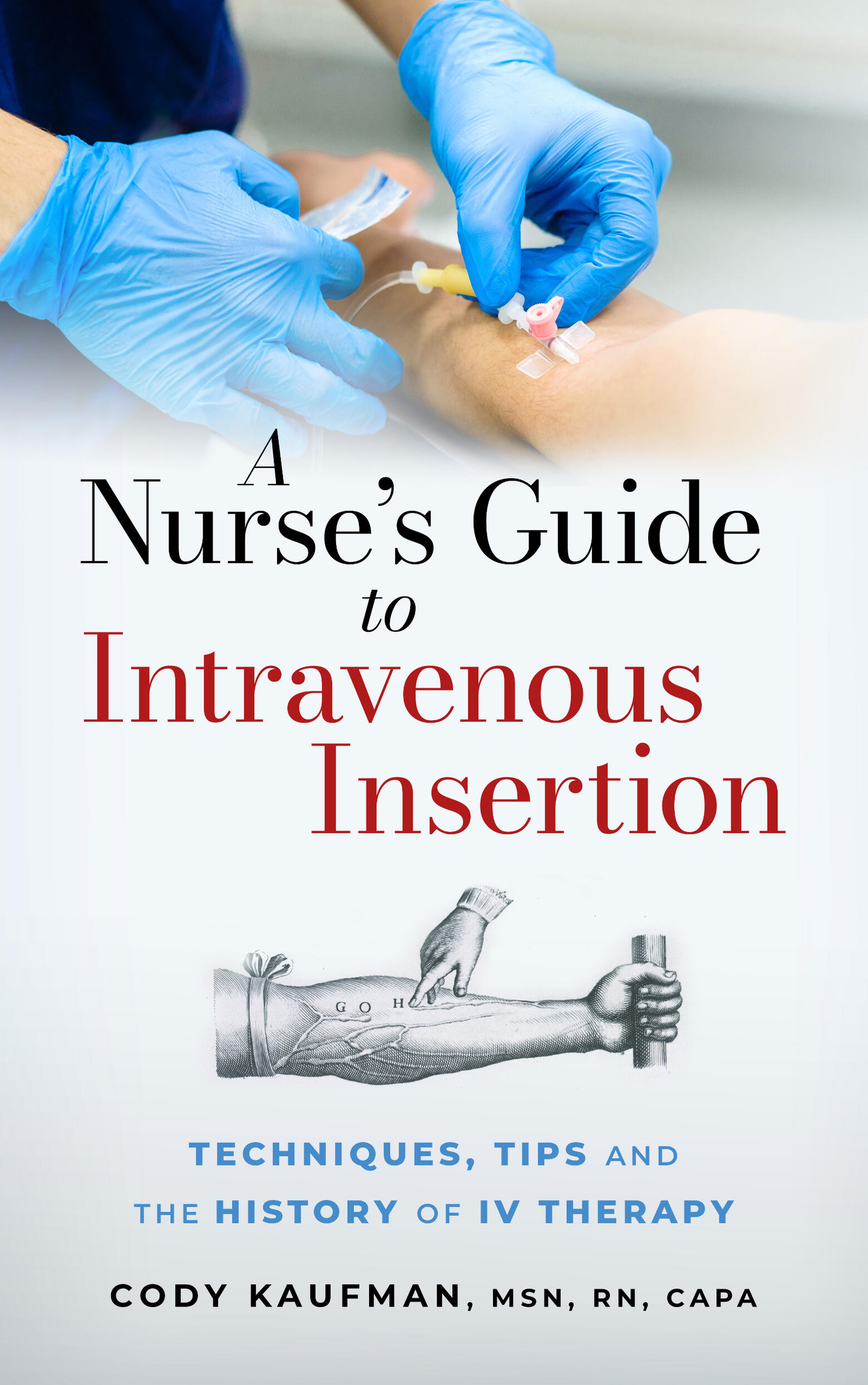
Want the full technique, step by step? A Nurse's Guide to Intravenous Insertion covers it with photographed grips and real-world troubleshooting.
The infiltration grading scale
| Grade | What you see |
|---|---|
| 0 | No symptoms |
| 1 | Skin blanched, edema less than 1 inch (2.5 cm) in any direction, cool to touch, with or without pain |
| 2 | Skin blanched, edema 1 to 6 inches (2.5 to 15 cm), cool to touch, with or without pain |
| 3 | Skin blanched and translucent, gross edema over 6 inches (15 cm), cool, mild to moderate pain, possible numbness |
| 4 | Skin blanched, translucent, tight, leaking, discolored or bruised; gross edema over 6 inches; deep pitting edema; circulatory impairment; moderate to severe pain. Any infiltration of blood products, irritants or vesicants |
Adapted from the infiltration scale used in Infusion Nurses Society standards. Note that any vesicant leak is treated as grade 4.
First steps when you find it
- Stop the infusion and disconnect the tubing.
- For a suspected vesicant, many protocols say to try aspirating drug from the catheter before removing it. Check yours.
- Remove the catheter unless your protocol says to leave it for an antidote.
- Measure and mark the borders of swelling or discoloration with a skin marker. Take a photo if your facility allows it.
- Elevate the extremity to help reabsorption.
- Notify the provider and pharmacy if a vesicant was involved. Some agents have specific antidotes, such as phentolamine for certain vasopressor extravasations or hyaluronidase for some others.
- Warm or cold? It depends on the drug. Some call for cold, others for warmth. Follow the protocol, not habit.
- Document the grade, size, drug, approximate volume, interventions and patient response, then reassess on schedule.
- Restart in the other arm if possible, or proximal to the injury, never below it on the same limb.
Prevention beats treatment
- Avoid areas of flexion when you can, especially for vesicants.
- Choose a catheter smaller than the vein and secure it well. Dislodgement is a major cause.
- Assess the site often. High-risk infusions need much more frequent checks than routine fluids.
- Teach the patient to call you for any pain, swelling or burning, right away.
- Don't trust the pump to catch it. Pumps detect pressure, not tissue damage.
The pump didn't alarm is not a site assessment.
References
- Infusion Nurses Society. Infusion Therapy Standards of Practice (current edition): infiltration and extravasation.
- London Health Sciences Centre. Infiltration grading scale (clinical reference document).
This post is for education. Always follow your facility's policies and your scope of practice, and ask for help when you need it.