
Key takeaways
- A Cochrane review found no clear difference in bloodstream infection or phlebitis between routine and clinically indicated replacement.
- Clinically indicated replacement means fewer needle sticks and lower cost, but only works with real site assessment.
- Every day, ask: is this IV still needed? Remove idle lines.
For years, many units changed peripheral IVs on a clock: every 72 hours, sometimes 96, whether the site looked perfect or not. The idea was simple. Older catheters cause more phlebitis and infection, so replace them before trouble starts. The evidence turned out to be more interesting than that.
What the research found
A Cochrane systematic review by Webster and colleagues (updated in 2019) compared routine replacement with replacement only when clinically indicated, meaning when the site showed a problem or therapy ended. Across the randomized trials included, the reviewers found no clear difference between the two approaches in catheter-related bloodstream infection or phlebitis. Clinically indicated replacement did mean fewer catheters per patient and lower costs.
In plain English: rotating a healthy IV on a timer adds a needle stick without clearly adding safety. Many organizations, including the Infusion Nurses Society, now support removing peripheral catheters when clinically indicated rather than on a fixed schedule. Your facility's policy still rules, and some units keep time limits for specific situations, such as lines placed in an emergency under less-than-ideal conditions.
"Clinically indicated" is not "forget about it"
The approach only works if someone is actually looking at the site. A large 2023 review by Marsh and colleagues found that roughly one in three peripheral IVs fails before treatment is finished. Catching problems early is the whole game.
Your daily site check
- Look: redness, swelling, leaking, a dressing that's loose, wet or soiled.
- Touch: warmth, coolness, hardness or a cord along the vein.
- Ask: pain, burning, tightness? Patients often notice first.
- Score: use a phlebitis tool like the VIP score and an infiltration scale, and document it.
- Flush: resistance or pain on flushing is a red flag.
Check more often for high-risk infusions, sedated patients, children, and anyone who can't tell you something hurts.
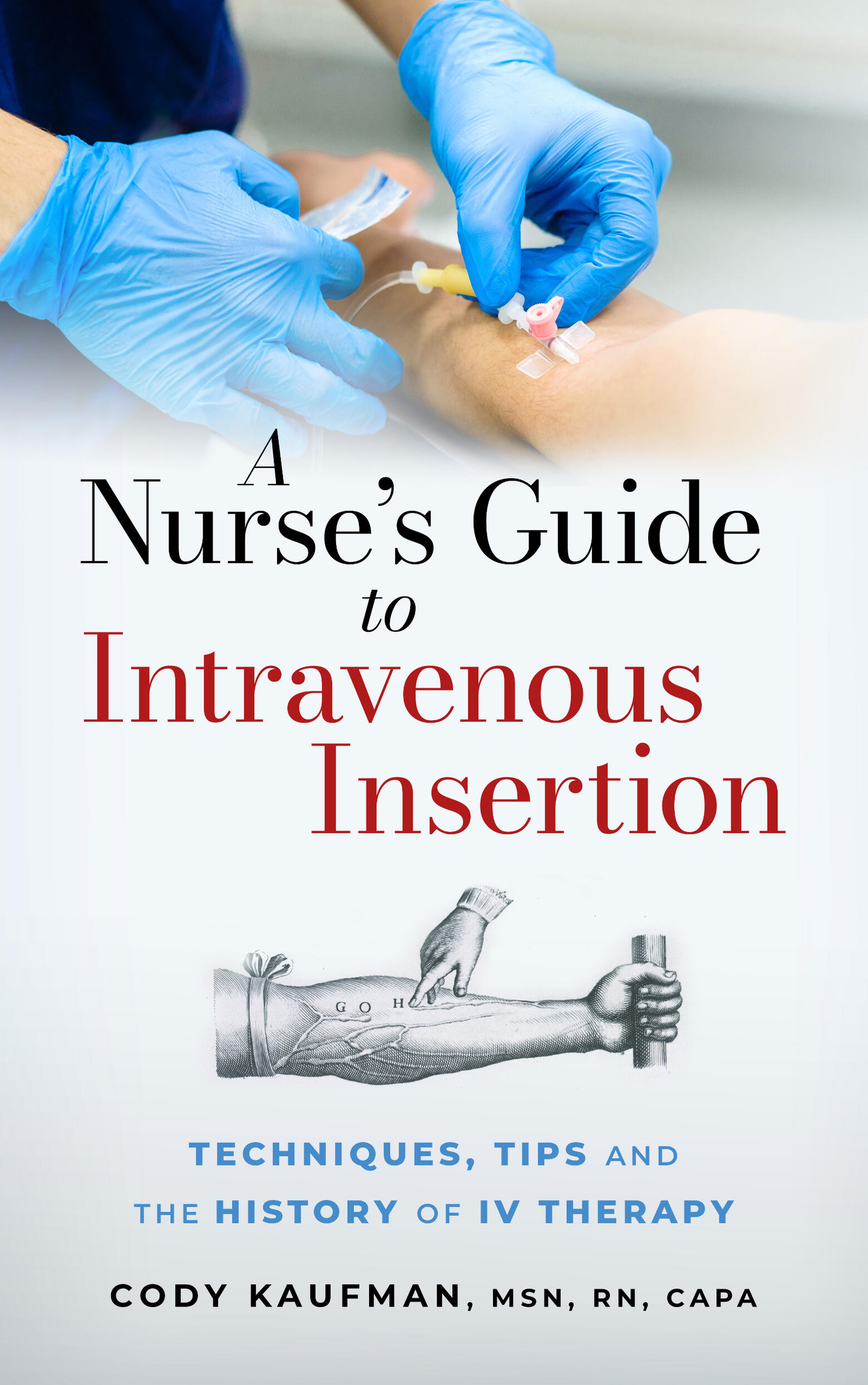
Want the full technique, step by step? A Nurse's Guide to Intravenous Insertion covers it with photographed grips and real-world troubleshooting.
The most underrated question: is it still needed?
Idle IVs are common. The patient finished antibiotics two days ago, takes everything by mouth, and still has a line "just in case." Every day an unneeded catheter stays in is a day of infection and phlebitis risk with no benefit. At shift change or rounds, make it a habit to ask: does this patient still need this IV? If not, advocate for removing it.
When to remove right away
- Phlebitis score of 2 or higher
- Any sign of infiltration or extravasation
- Signs of local infection, or a patient with fever and no other clear source
- Occlusion that won't clear safely
- Therapy is complete
Replace it when the site says so, not when the clock says so. Then actually look at the site.
References
- Webster, J., Osborne, S., Rickard, C. M., & Marsh, N. (2019). Clinically-indicated replacement versus routine replacement of peripheral venous catheters. Cochrane Database of Systematic Reviews, CD007798.pub5. PubMed 30671926
- Marsh, N., Larsen, E. N., Ullman, A. J., Mihala, G., Cooke, M., Chopra, V., Ray-Barruel, G., & Rickard, C. M. (2023). Peripheral intravenous catheter infection and failure: A systematic review and meta-analysis. International Journal of Nursing Studies.
This post is for education. Always follow your facility's policies and your scope of practice, and ask for help when you need it.